info@sandmancrusher.com
+86 150 9289 4665

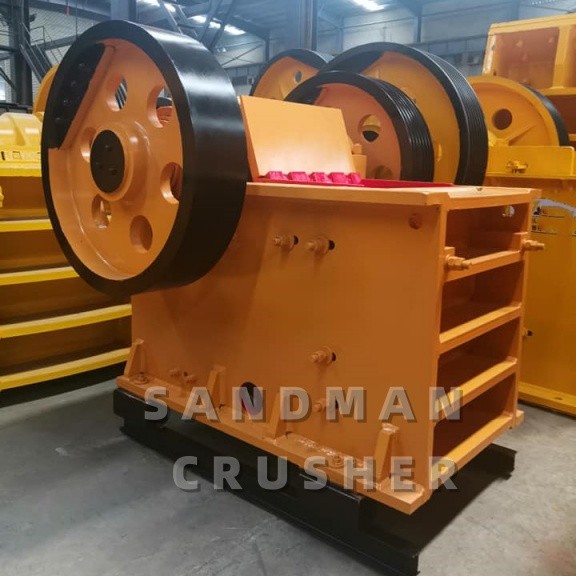
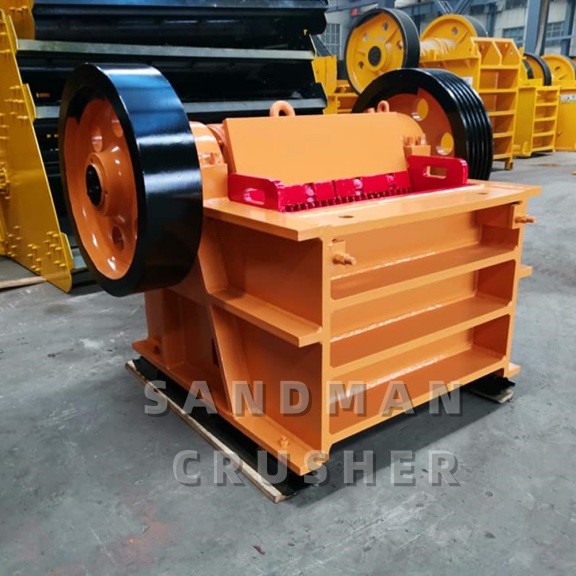
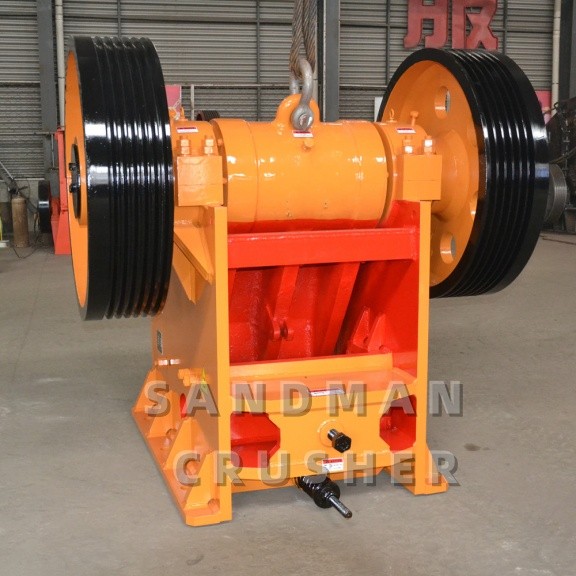
jaw crushers are mainly used for the pimary crushing of various raw ores, breaking large pieces of ore to the particle size required for further processing.
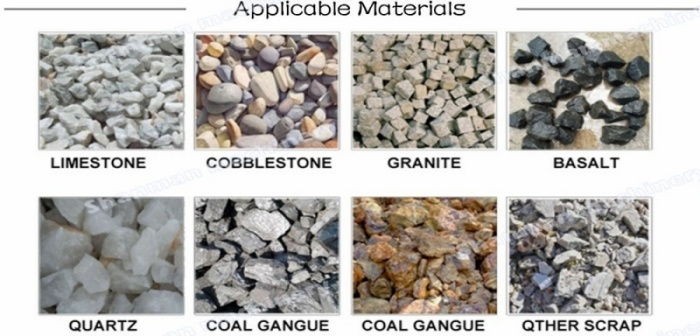
Suitable materials: Granite, marble, basalt, limestone, quartz stone, river pebbles, iron ore, copper ore, demolition, glass, waste bricks,etc.
What is a crusher jaw crusher?
A crusher jaw crusher, also known as a "jaw breaker," uses the squeezing motion of two jaw plates to crush large pieces of stone. It’s a key machine in gravel production, mainly for coarse and medium crushing, and works great with hard materials.
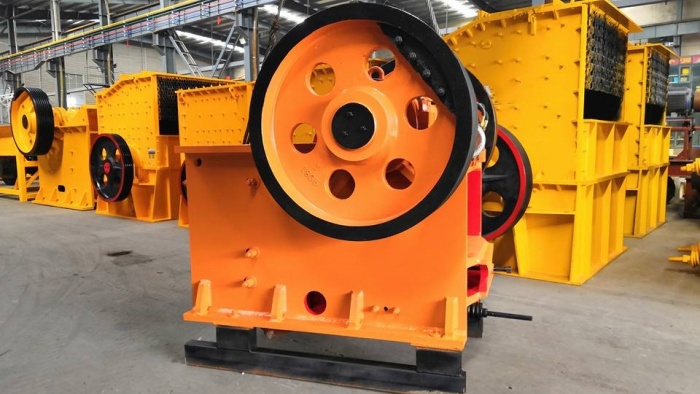
What are the uses and application areas of a crusher jaw crusher?
1. Mining Industry: A crusher jaw crusher usually used as primary crusher for all kinds of raw ore. It breaks large materials down to the size needed for further processing.
2. Building Materials Industry: A crusher jaw crusher crushes sand, gravel, cement raw materials and other construction supplies. It can process granite, limestone into aggregates and sand, and also crush gypsum, clay and other materials. Crusher jaw crusher is a key piece of equipment in building materials production lines.
3. Infrastructure Engineering: a crusher jaw crusher supports road, railway, bridge project, and produces the roadbed and concrete aggregates these projects need.
4. Solid Waste Recycling: A crusher jaw crusher can crush construction waste, industrial slag, waste concrete and other solid waste.
What materials can a crusher jaw crusher process?
Crusher jaw crusher can crush all kinds of materials with compressive strength under 320MPa. They can crush many stones, such as: granite, basalt, limestone, river pebbles, quartz, sandstone and so on.
What is the capacity of a crusher jaw crusher?
crusher jaw crushers have in many models, with output from 1 to 1000 tons per hour, suitable for small, medium and large crushing production lines.
Small machines have an output of 1-50 tons per hour, medium machines 50-200 tons per hour, and large machines 0-1000 tons per hour. Users can flexibly select the model based on their production scale.
What is the feed size for a crusher jaw crusher?
Feed size means the largest material you can safely put into a jaw crusher.It directly decides what machine size you need and how much it can process.This is one of the most important settings you must control in production.
Crusher jaw crusher offers a variety of feed opening specifications. Standard small models can handle feed sizes up to 350mm, medium ones up to 800mm, and the largest can take materials as big as 1200mm.
What is the discharge size of a crusher jaw crusher?
The discharge opening is flexibly adjustable, with a typical output particle size range between 10-300mm. You can easily adjust the output size to match your needs, making it perfect for different coarse and medium crushing jobs.
You can set output size at 100–360mm for coarse crushing, at set 10–100mm for medium crushing.
What is the working principle of a crusher jaw crusher?
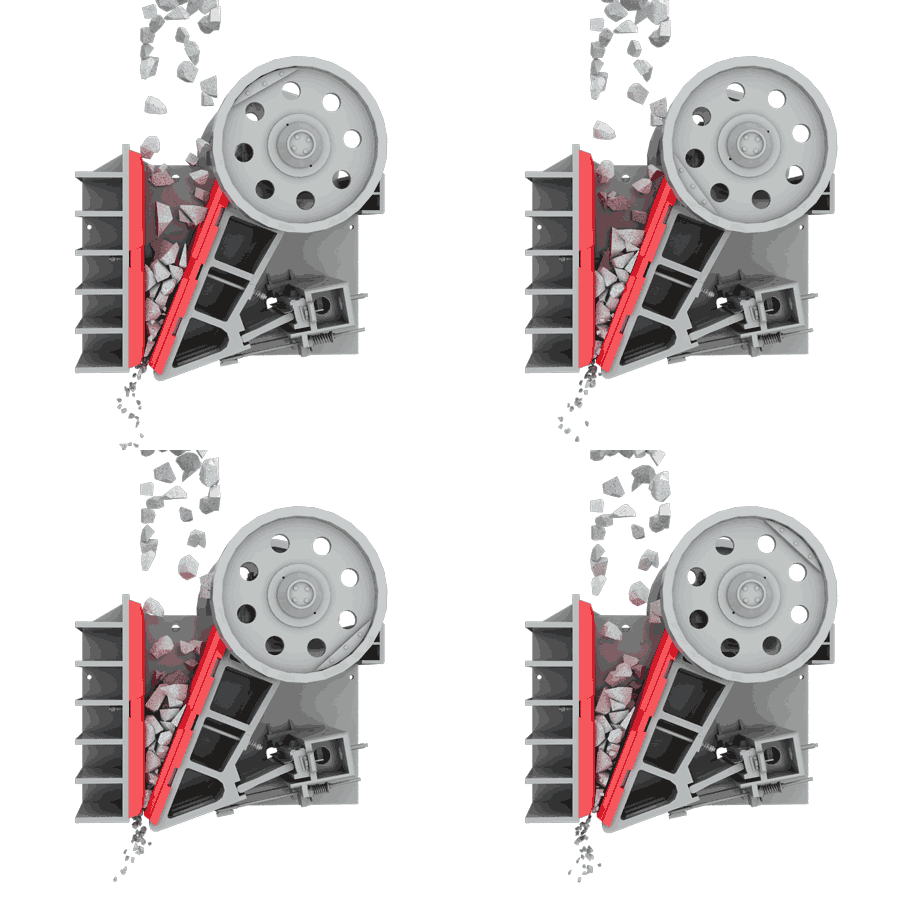
A crusher jaw crusher works by simple back and forth compression, making it easy and efficient to run.The motor turns the eccentric shaft through a belt and pulley, making the movable jaw move up and down steadily.
As the movable jaw moves up, the angle between it and the toggle plate gets larger, pushing the jaw plate toward the fixed one.
Materials in the crushing chamber are crushed by being squeezed, split, and bent between the two jaw plates.
When the jaw moves down, the angle becomes smaller and the jaw pulls back thanks to the return spring.
Crushed materials then fall out smoothly from the discharge opening under their own weight.
As the motor keeps running, the moving jaw crushes and discharges materials repeatedly, enabling continuous, high-volume crushing.
What are the main parameters of a crusher jaw crusher?
| Model | Max Feed (mm) | Adjustment (mm) | Capacity (t/h) | Motor Power (kw) | Weight (t) | Overall size (mm) |
| PE150x250 | 125 | 10-40 | 1-3 | 5.5 | 0.9 | 875x745x935 |
| PE200x300 | 180 | 15-50 | 2-6 | 7.5 | 1.2 | 910x750x990 |
| PE250x400 | 210 | 20-80 | 8-35 | 15 | 3 | 1430x1300x1350 |
| PE400x600 | 340 | 40-100 | 15-80 | 30 | 6 | 1866x1748x1600 |
| PE500x750 | 425 | 50-120 | 20-100 | 55 | 10 | 1905x1950x2034 |
| PE600x900 | 520 | 62-200 | 50-180 | 75 | 16.5 | 2540x2056x2365 |
| PE750x1060 | 630 | 100-280 | 100-350 | 132 | 26.5 | 3250x2480x2930 |
| PEX150x750 | 120 | 15-50 | 8-25 | 15 | 4 | 1200x1530x1060 |
| PEX250x750 | 210 | 25-60 | 15-35 | 30 | 5.7 | 1380x1750x1540 |
| PEX250x1000 | 210 | 20-60 | 15-50 | 30 | 7.4 | 1400x1915x1490 |
| PEX250x1200 | 210 | 25-60 | 20-70 | 37 | 10.4 | 1400x2115x1490 |
| PEX300x1300 | 250 | 20-90 | 30-100 | 55 | 13.7 | 1770x2420x1550 |
Note: Technical data are subject to change without prior notice.
What are the Main Components of a crusher jaw crusher?
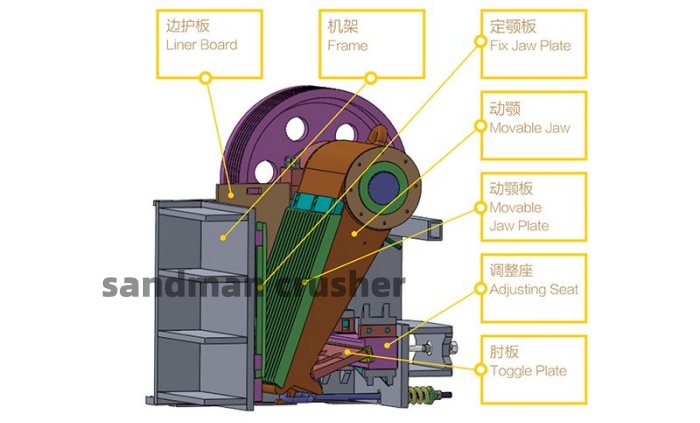
1. Frame
The frame is the main base of the crusher jaw crusher. It’s welded from Q235B steel plates, strong and shock-resistant. It supports all parts and keeps the machine running steadily.
2. Moving Jaw Assembly
This is the main moving part. It includes the jaw body, eccentric shaft, bearings, pulley and flywheel. It drives the jaw plate back and forth to crush materials.
3. Jaw Plate
They include fixed and movable jaw plates. They touch the material directly and do the actual crushing. They are made of high-manganese steel, they are durability.
4. Toggle Plate:
Serves as both a transmission and overload protection mechanism. It automatically breaks when the equipment is overloaded, protecting the core crusher component from damage;
5. Adjustment Mechanism:
Used to adjust the discharge opening size, precisely controlling the discharge particle size;
6. Lubrication System:
It lubricates moving parts like the eccentric shaft and bearings, cuts down wear, and helps parts last longer.
7. Return Spring: Drives the movable jaw to return to its original position, ensuring orderly crushing and discharge cycles;
8. Power System: The electric motor provides power to the equipment, driving the entire machine to operate stably.
What are the advantages of a crusher jaw crusher?
1. Strong Crushing Capacity:
Crusher jaw crusher has a deep crushing chamber with no dead space, so it takes in more material and crushes more efficiently. It can easily handle large, hard materials with a high crushing ratio.
2. Stable and Reliable Operation:
Simple structural design, durable core components, low failure rate, capable of continuous operation for extended periods;
3. Wide Application:
Crusher jaw crusher can crush various hard materials and medium-hard materials. crusher jaw crusher is suitable for mining, building materials, solid waste recycling, and so on;
4. Flexible and Convenient Adjustment:
Discharge particle size can be adjusted as needed, simple operation, adaptable to different discharge particle size requirements;
5. Low Maintenance Costs:
Easy disassembly and assembly of components, quick replacement of wearing parts, low operating costs;
6. Energy-Saving & Efficient:
It can save over 15% energy compared to similar machines, lowering production costs.
7. Reliable Overload Protection:
The toggle plate protects the machine from damage caused by foreign objects and extremely hard materials, making operation safer.
What are the wear parts of a crusher jaw crusher?
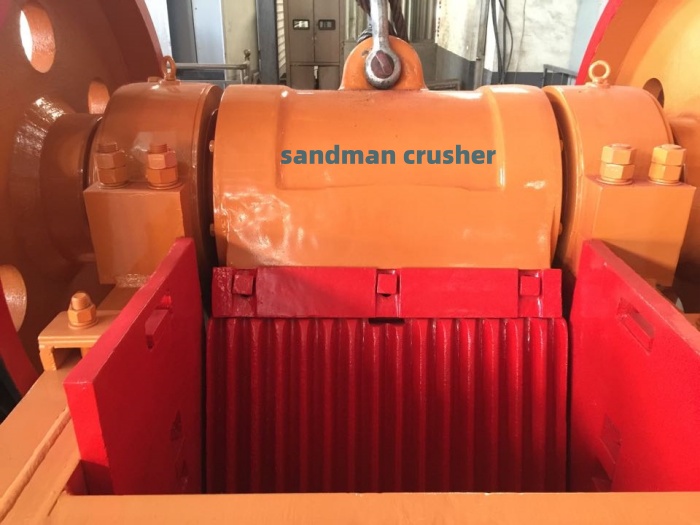
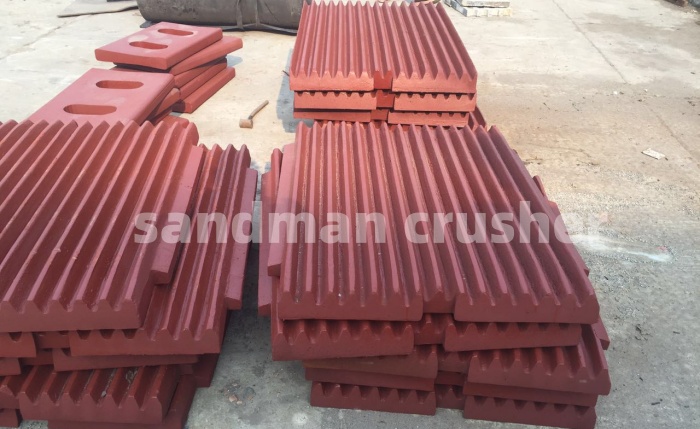
The main wear parts of a crusher jaw crusher include: moving jaw plate, fixed jaw plate, toggle plate, side guard plates, and bearings. Among these, the jaw plate and toggle plate experience the most wear. All parts are made of tough, wear-resistant high-manganese steel.This makes them last longer, cuts down replacements, and reduces downtime.
Crusher jaw crusher Maintenance & Standard Operation Guide
Daily Maintenance of crusher jaw crusher
Before starting the crusher jaw crusher every time, you need to check the tightness of bolts and belts to make sure they are not loose or damaged.
Also, check the oil level of the lubrication system to ensure sufficient lubrication. Clean up the residual materials in the crushing chamber to avoid material blockage when starting up. During the operation, keep a close eye on the equipment’s vibration and noise. Once you find any abnormal situation , stop the machine immediately for inspection.
Regular Maintenance of crusher jaw crusher
You need to clean up the dust on the crusher jaw crusher, check the wearing parts, if there is any worn part, please replace them at once. Every month, carry out lubrication maintenance on rotating parts like bearings and eccentric shafts, and replace the grease. Every three months, you need to give the machine a full checkup. you need to adjust the internal clearances, and look for any issues with wiring and the motor.
Long-Term Shutdown Maintenance of crusher jaw crusher
If you plan to stop the crusher jaw crusher for a long time, you need to make the crushing chamber empty and clean the whole machine. Do anti-rust treatment on vulnerable parts and all metal components.
Cut off the power supply and cover the equipment to prevent corrosion from moisture and dust. Before you restart the machine, inspect and adjust it fully.
Only start the machine after you make sure all parts work properly.
Standard Operation Rules for Crusher Jaw Crusher
Never overload the crusher jaw crusher. Do not feed materials that are too hard or too large into the machine.
Avoid running the crusher without any material for a long time. Always follow the standard steps when starting and stopping the crushing equipment.
Following these rules reduces wear on parts, extends the life of your jaw crusher, and keeps it working at high efficiency.
Crusher Jaw Crusher Common Fault Troubleshooting Manual
I. Equipment Fails to Start
1. Cause of Fault: Power phase loss, voltage too low, poor electrical contact.
Solution: Check the three-phase power supply, voltage levels, and wiring connections; tighten loose terminals; repair faulty wiring.
2. Cause of Fault: Motor damage, control cabinet protection device tripped.
Solution: Reset the tripped switch; test the motor's insulation performance; repair or replace the faulty motor.
3. Cause of Fault: Drive belt is too loose, coupling failure.
Solution: Adjust the belt tension; correct the coupling's coaxial alignment; repair damaged coupling components.
4. Cause of Fault: Iron blocks or stones jammed inside the crushing chamber; excessive load.
Solution: Shut down the machine immediately, remove foreign objects from the crushing chamber, and never start under load.
5. Cause of Fault: Insufficient lubrication, seized bearings.
Solution: Inspect the lubrication oil lines; replenish with the appropriate lubricant; diagnose and replace seized bearings.
II. Low Crushing Output / Discharge Particle Size Too Large
1. Cause of Fault: Severe wear on the movable jaw plate or fixed jaw plate.
Solution: Reverse the jaw plates for continued use; if wear exceeds permissible limits, replace them with brand-new jaw plates.
2. Cause of Fault: Discharge opening gap is too wide.
Solution: Precisely adjust the width of the discharge opening according to production requirements, then lock it in place.
3. Cause of Fault: Uneven feeding, insufficient feed volume.
Solution: Adhere to proper operating procedures to ensure uniform and continuous feeding; control the feed rate and volume.
4. Cause of Fault: Belt slippage, abnormal equipment operating speed.
Solution: Retension the belt; inspect the pulleys for wear; promptly replace any damaged belts.
5. Cause of Fault: Material is excessively hard or wet, leading to adhesion and clogging.
Solution: Screen materials to meet specifications; lower material moisture; clear adhered material in the crushing chamber promptly.
III. Excessive Equipment Vibration or Abnormal Noise
1. Cause of Fault: Loose anchor bolts.
Solution:Shut down the equipment for inspection; thoroughly tighten all anchor bolts to ensure the equipment foundation remains stable.
2. Cause of Fault:Worn bearings, excessive bearing clearance, or damaged bearings.
Solution: Measure the bearing clearance; replace any worn or damaged bearings.
3. Cause of Fault: Worn or fractured toggle plates or toggle plate pads.
Solution: Install new qualified toggle plates and pads correctly.
4. Cause of Fault: Loose connections in components such as the connecting rod or thrust plate.
Solution: Inspect each component individually and tighten the bolts connecting the connecting rod, thrust plate, and other related parts.
5. Cause of Fault: Foreign objects (e.g., iron pieces) have entered the crushing chamber.
Solution: Shut down the equipment to remove the foreign objects; install an iron removal device at the feed inlet.
6. Cause of Fault: Loose flywheel or pulley.
Solution: Tighten the keys and mounting bolts for the flywheel and pulley; correct their installation positions.
IV. Excessive Bearing Temperature
1.Cause of Fault: Insufficient, contaminated or wrong type of lubricant.
Solution: Add the appropriate amount of qualified lubricant in accordance with standards; periodically replace contaminated lubricant.
2. Cause of Fault: Excessive grease filling.
Solution: Remove the excess grease; control the filling quantity lubrication volume is within the standard range.
3. Cause of Fault: Worn, damaged, or misaligned bearing installation.
Solution: Replace damaged bearings and realign the bearing installation position.
4. Cause of Fault: Improper bearing clearance adjustment.
Solution: Re-adjust the bearing clearance to ensure it complies with equipment installation standards.
5. Cause of Fault: Equipment operating continuously under overload conditions.
Solution: Control the feed rate to prevent the equipment from operating under overload for extended periods.
V. Belt Slippage, Overheating, or Rapid Wear
1. Cause of Fault: Insufficient belt tension.
Solution: Adjust the belt tensioning device to tighten the belt to the appropriate tension.
2. Cause of Fault: Severely worn pulley grooves.
Solution: Repair the worn pulley grooves; if wear exceeds permissible limits, replace the pulley.
3. Cause of Fault: Belt aging or cracking.
Solution: Promptly replace the belt with a new one of the same specifications.
4.Cause of Fault: Dual pulleys not in the same plane.
Solution: Correct the pulley coaxiality to ensure smooth belt operation.
5. Cause of Fault: Equipment subjected to excessive load over a prolonged period.
Solution: Avoid overload operations and ensure a uniform feed rate.
VI. Material Clogging or Stalling (Jamming)
1. Cause of Fault: Excessive feed speed or feed volume.
Solution: Reduce the feed speed and control the feed volume to ensure uniform feeding.
2. Cause of Fault: Material is wet and sticky, adhering to the inner walls of the crushing chamber.
Solution: Clean out the collected material inside the chamber and dry the material prior to processing.
3. Cause of Fault: The discharge opening is too small, or discharge is obstructed.
Solution: properly increase the discharge opening width to ensure smooth material flow.
4. Cause of Fault: Belt slippage; insufficient equipment power.
Solution: Tension the belt to improve the equipment's transmission efficiency.
5. Cause of Fault: Mismatch with the discharge conveying equipment.
Solution: Adjust the speed of the discharge conveying equipment to match the crusher's discharge rate.
VII. Toggle Plate Fracture
1. Cause of Fault: Entry of non-crushable objects, resulting in severe impact overload on the equipment.
Solution: Install iron removal equipment to prevent foreign objects (such as iron parts) from entering the crushing chamber.
2. Cause of Fault: Substandard toggle plate quality or improper installation.
Solution: Replace with a genuine, qualified toggle plate; perform installation and commissioning in accordance with specifications.
3. Cause of Fault: Excessive clearance in the thrust plates.
Solution: Adjust the thrust plate clearance to ensure a tight fit.
4. Cause of Fault: Unstable main unit foundation or abnormal vibration.
Solution: Reinforce the equipment foundation and tighten all connecting bolts.
VIII. Uneven Product Particle Size
1. Cause of Fault: Severe and uneven wear of the jaw plates.
Solution: Replace the jaw plates or reverse their orientation to ensure even wear.
2. Cause of Fault: Loose or unstable discharge opening setting.
Solution: Regularly inspect the discharge opening adjustment mechanism and tighten/secure it promptly.
3. Cause of Fault: Feed segregation or excessive feeding on one side.
Solution: Adjust feeding to ensure centered, even material distribution.
4. Cause of Fault: Abnormal movement of the movable jaw.
Solution: Inspect the connecting rod, bearings, and movement mechanism; repair or replace faulty components.
What information do you need from me to provide an accurate quote?
Answer: To give you the most accurate quote, our specialists will typically ask about:
1) The type of material you're crushing,
2) Your desired tons-per-hour output,
3) The target size of your final product.
With this information, we can configure the perfect machine or complete processing line for your needs.
Contact: Hebe Wang
Phone: +86 150 9289 4665
Tel: +86 150 9289 4665
Email: info@sandmancrusher.com
Add: No.23 Yihe Road,Linyi City, Shandong Province, China
We chat