info@sandmancrusher.com
+86 150 9289 4665

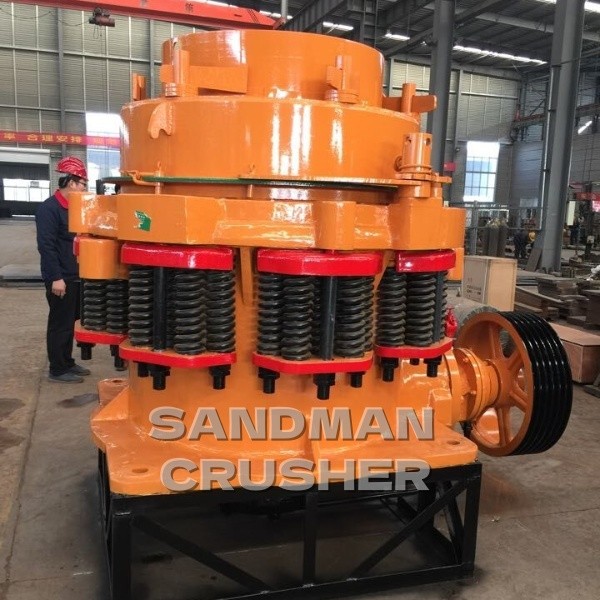
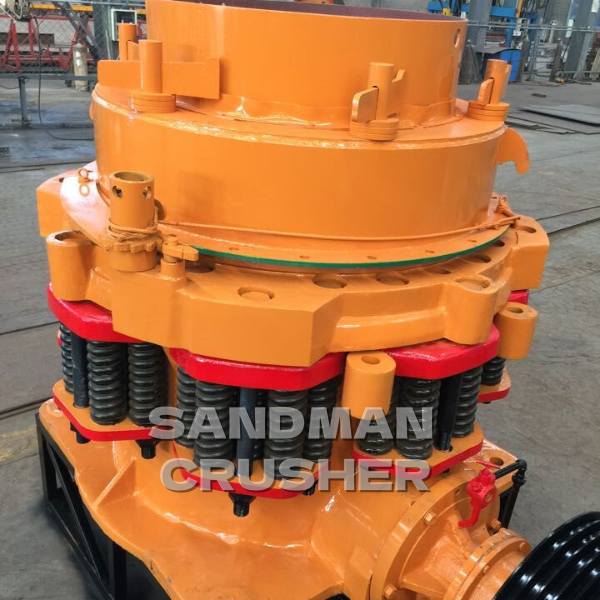
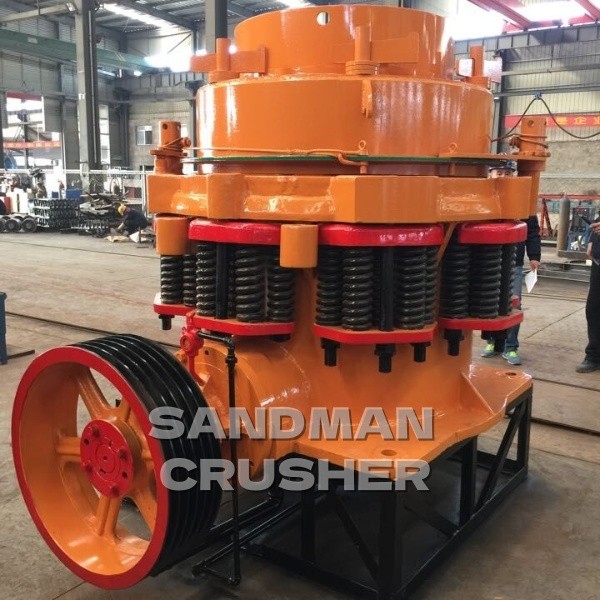
The Symons stone cone crusher—also known as the spring stone cone crusher or compound stone cone crusher—is an iconic piece of fine-crushing equipment in the global mining, aggregate, and construction materials industries.
Application fields: mining, smelting, construction, highway, railway, water conservancy and chemical industry, and many other industries
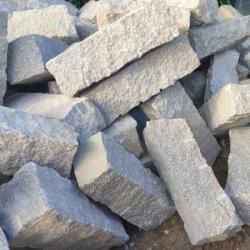
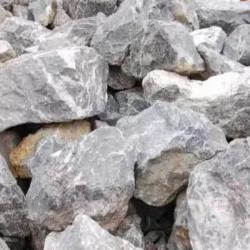
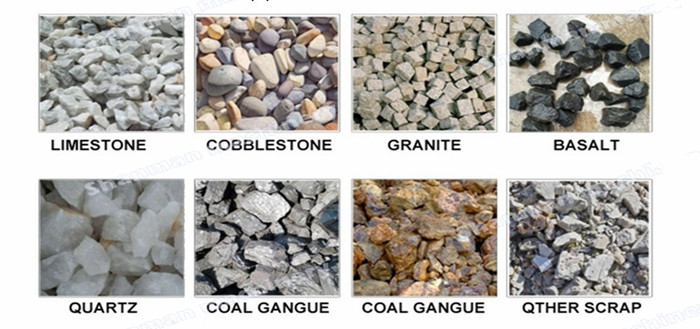
Applicable materials: suitable for crushing hard and medium-hard ores and rocks, such as iron ore, limestone, copper ore, quartzite, granite, basalt, sandstone, pebbles, and various non-ferrous metal ores etc.
1. What is the Symons stone cone crusher, and what is its historical background?
The Symons stone cone crusher—also known as the spring stone cone crusher or compound stone cone crusher—is an iconic piece of fine-crushing equipment in the global mining, aggregate, and construction materials industries. Originally developed by the U.S.-based Symons Engineering Company in the early 20th century, it has undergone over a century of continuous improvement, structural optimization, and localization by manufacturers worldwide. It has evolved into one of the most mature, cost-effective, and versatile crushing machines for hard rock and mineral processing.
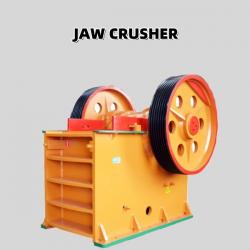
Unlike jaw crushers, which are primarily used for primary coarse crushing, Symons stone cone crusher is suitable for secondary, tertiary, and even quaternary crushing stages. They excel at processing raw materials ranging from medium-hard to extremely hard—with Mohs hardness levels of 6 to 16—including granite, basalt, quartzite, iron ore, copper ore, gold ore, limestone, river pebbles, dolomite, and non-ferrous metal ores. The core design philosophy of the Symons stone cone crusher centers on two revolutionary technologies: inter-particle crushing (layer crushing) and spring-based overload protection against foreign objects. These innovations addressed two long-standing pain points of early cone crushers: the production of irregular, fragile flaky particles and severe machine damage caused by uncrushable iron foreign objects entering the crushing chamber.
While retaining the classic spring safety mechanism, modern improved Symons stone cone crusher integrate auxiliary hydraulic chamber clearing and discharge setting adjustment functions. They are available in three main crushing chamber configurations to meet diverse production needs: the Standard type for medium-sized secondary crushing, the Medium-Head type for medium-to-fine crushing, and the Short-Head type for ultra-fine sand making and mineral grinding pre-processing. With capacities ranging from 20 to 1,000 tons per hour, they are suitable for both small-scale mobile crushing stations and large-scale stationary mineral processing plants—a versatility that explains their enduring popularity across Asia, Africa, Europe, and South America.
2. Complete Structural Composition of the Symons stone cone crusher
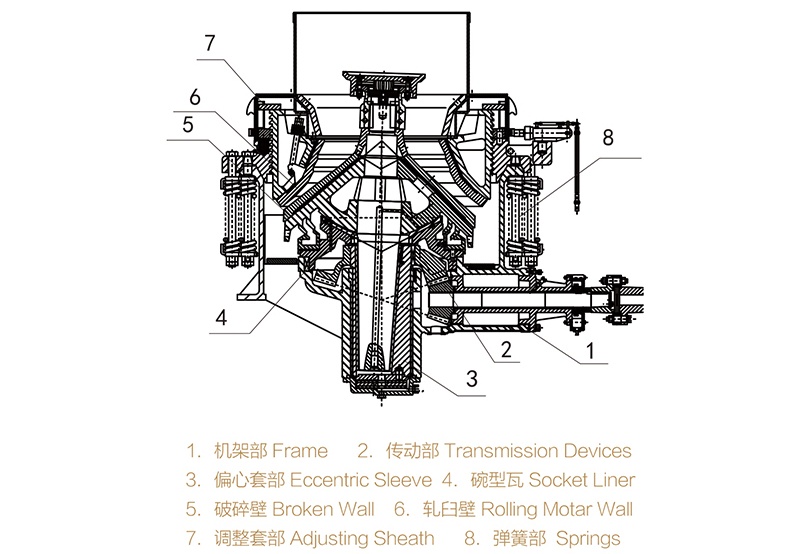
The Symons stone cone crusher comprises six independent core systems: the crushing chamber assembly, the main frame and support assembly, the eccentric drive system, the spring safety protection system, the circulating oil lubrication system, and the hydraulic auxiliary adjustment system. Each component is manufactured from heavy-duty cast steel and highly wear-resistant manganese alloy to withstand continuous high-frequency impact and crushing forces.
2.1 Crushing Chamber Assembly (Core Crushing Zone)
This assembly performs the actual material crushing and bears the heaviest wear loads; it consists of the moving cone (mantle) and the fixed cone (concave/bowl liner). The mantle is securely fixed to the main shaft and performs an eccentric gyratory motion, while the concave liner is installed within the adjustment ring of the upper frame. Different crushing chamber profiles (Standard, Medium, and Short-head types) are interchangeable on the same main frame, allowing enterprises to switch between medium and fine crushing without purchasing additional equipment, thereby significantly increasing equipment utilization. The liners are made of high-manganese steel; under normal operating conditions, they can process thousands of tons of rock, reducing downtime caused by frequent replacements. A distribution plate is installed at the top feed hopper to evenly disperse material into the annular crushing chamber, preventing localized clogging caused by concentrated feeding.
2.2 Main Frame and Main Shaft Support System
The main frame features a heavy-duty, one-piece cast steel structure that serves as the load-bearing foundation for all components. It utilizes a thickened, split-body design to withstand the immense reaction forces generated during rock crushing. The oversized main shaft acts as the core for force transmission to the moving cone; it features a reinforced solid shaft design to prevent bending or deformation under heavy loads. A wear-resistant bronze bottom liner (bowl bearing) supports the base of the main shaft; its self-lubricating alloy surface minimizes frictional losses during high-speed gyration, ensuring stable, continuous operation over the long term.
2.3 Eccentric Drive System
Power transmission begins with a three-phase drive motor, which transfers torque to the horizontal countershaft via V-belts and a large drive pulley. A pair of precision-machined bevel gears (pinion and large bevel gear) transmits horizontal rotational power to a vertical eccentric sleeve. The eccentric sleeve, featuring an offset inner bore, fits over the lower end of the main shaft; as the sleeve rotates, it drives the main shaft and the movable crushing cone in a circular motion with a fixed eccentricity. A counterweight is mounted on the eccentric sleeve to balance the centrifugal forces generated by the gyratory motion, thereby minimizing machine vibration. Vibration and noise levels are exceptionally low. All gear sets are made of heat-treated alloy steel, offering high hardness and wear resistance.
2.4 Spring-based Overload Protection System
High-strength compression springs arranged around the adjustment ring on the upper frame form the signature safety system of the Symons crusher. When uncrushable foreign objects (such as steel drill bits, iron chunks, or rebar) accidentally enter the crushing chamber, the resulting massive crushing force pushes the adjustment ring upward, compressing the springs; this temporarily widens the discharge opening, allowing the hard object to be automatically ejected. Once the object is discharged, the springs immediately return the adjustment ring to its original position, restoring the discharge setting without the need for manual disassembly or downtime for clearing debris. Compared to fully hydraulic cone crushers, this spring-based protection structure offers easier maintenance, a lower failure rate, and greater adaptability to harsh mining environments where hydraulic power supplies may be unstable.
2.5 Independent Thin-Oil Lubrication System
The Symons stone cone crusher is equipped with a fully independent, closed-loop thin-oil circulation station, completely separate from the grease lubrication systems of other crushing equipment. The system comprises an oil pump, a cooling radiator, a filter element, an oil reservoir, and the piping network. Lubricating oil continuously circulates to the main shaft bearings, eccentric sleeve, and gear meshing surfaces, dissipating frictional heat and forming a protective oil film. A dual-channel labyrinth dust seal prevents rock dust from entering the lubrication circuit and contaminating the oil, thereby extending the service life of bearings and gears. Temperature and pressure sensors are installed in the oil circuit; if the oil temperature exceeds safe limits or the oil pressure drops abnormally, the system triggers an automatic alarm and shuts down the machine to prevent damage to critical components. 2.6 Hydraulic Auxiliary System
The new, upgraded generation of Symons-style crushers incorporates an integrated hydraulic cylinder assembly alongside the traditional spring mechanism, offering two primary functions. First, the hydraulic lifting system allows for flexible adjustment of the discharge opening size by varying the height of the adjustment ring, enabling stepless control of the product particle size without the need for manual bolt tightening. Second, the system features a rapid clearing function: if the crusher stops while operating at full load and the crushing chamber becomes jammed with accumulated rock, the hydraulic system can quickly lift the fixed cone assembly to widen the discharge gap and clear all accumulated material within minutes—reducing downtime by more than two-thirds compared to the manual clearing methods required for older spring-type crushers.
3. What is the Working Principle of the Symons stone cone crusher 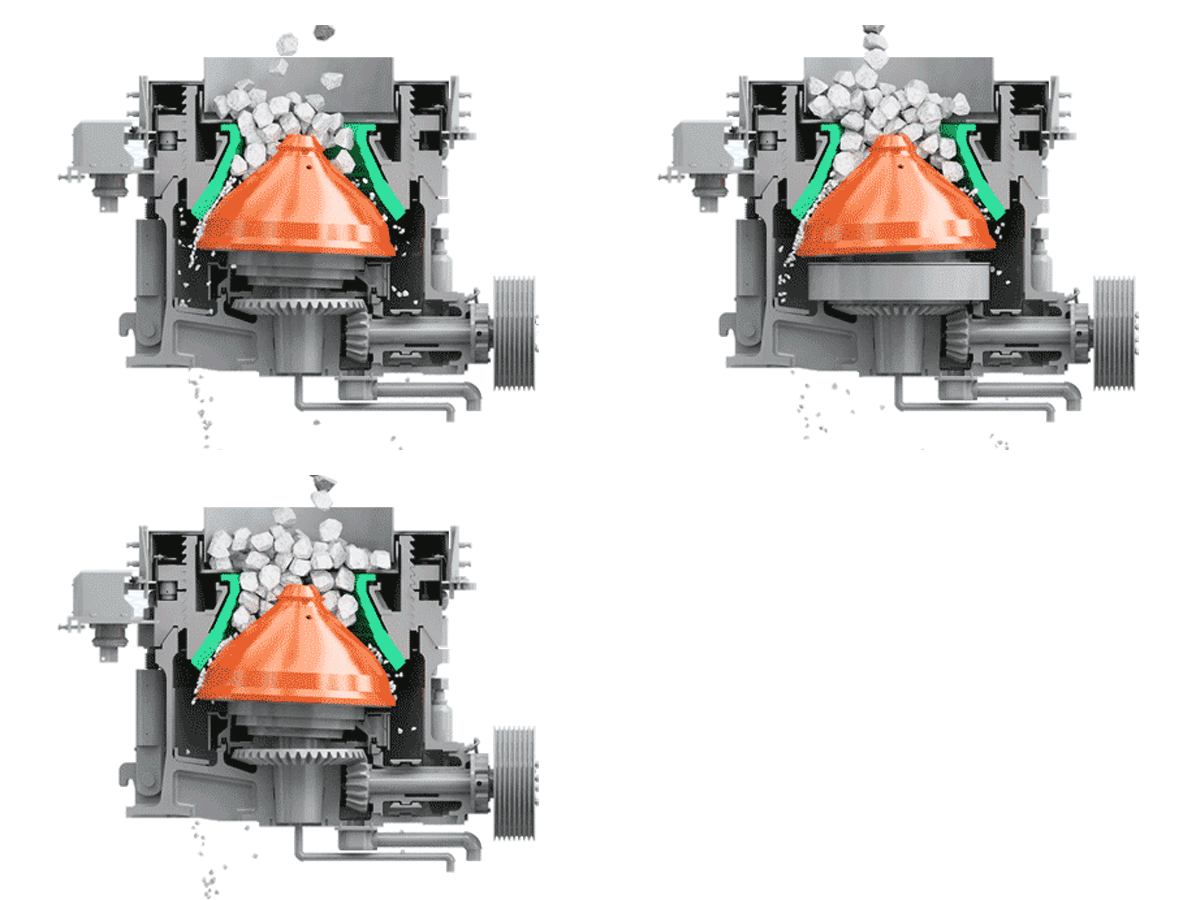
The core crushing mechanism of the Simons stone cone crusher relies on eccentric gyration and inter-particle (layer) crushing; this dual-action design distinguishes it from equipment that relies solely on simple compression.
Upon startup, the motor drives the counter shaft and bevel gear set, causing the eccentric sleeve to rotate continuously. The offset bore of the eccentric sleeve drives the main shaft and crushing cone, forcing them to gyrate 360 degrees around the machine's central axis. During this gyratory motion, the surface of the movable mantle periodically approaches and recedes from the stationary concave liner, creating an annular crushing chamber gap that varies from top to bottom.
Raw material is fed evenly from the top hopper into the wide upper section of the crushing chamber. Under the influence of gravity, the material is subjected to three types of mechanical forces: compression, bending, and inter-particle impact. Unlike jaw crushers, which merely squeeze rock against a stationary plate, the inter-particle crushing action causes material to compress and grind against itself within the chamber. This process disrupts the internal mineral crystal structures of the stones rather than simply fracturing their outer surfaces. This method minimizes the production of excessive needle-like or flaky fragments, yielding high-quality, cubical aggregates that meet standards for highway, high-speed rail, and concrete construction projects.
Following repeated compression and grinding, material particles smaller than the discharge opening at the bottom exit the machine, while oversized fragments remain in the upper chamber for further crushing cycles. If foreign metal objects enter the crushing chamber, a spring-based protection system allows the adjustment ring to lift, automatically ejecting the foreign matter. A hydraulic system enables real-time adjustment of the discharge gap to control the fineness of the finished product, allowing for the production of anything from medium-coarse aggregates to fine manufactured sand.
4. Core Competitive Advantages of Symons stone cone crusher
4.1 Excellent Product Shape and High Reduction Ratio
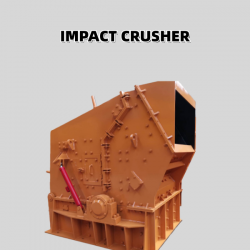
The inter-particle (layer) crushing mechanism achieves a reduction ratio of 3:1 to 10:1 in a single pass, significantly reducing the circulating load in closed-circuit crushing lines. The resulting cubic aggregate contains minimal flaky particles and low fines content, meeting strict highway aggregate gradation standards while enhancing concrete compressive strength. Many quarries replace two-stage impact crushers with a single Symons Short-Head cone crusher, thereby lowering production costs and improving aggregate quality.
4.2 Dual Safety Protection System and High Operational Reliability
A combination of mechanical spring overload release and hydraulic auxiliary protection provides dual safety assurance for the main unit. The spring system responds rapidly to sudden impacts from hard foreign objects, while the hydraulic clearing function resolves downtime caused by crushing chamber blockages. A heavy-duty integral frame, large-diameter main shaft, and independent circulating oil lubrication system effectively minimize component fatigue; properly maintained Symons crushers support continuous 24-hour operation for mining and aggregate projects, boasting a mean time between failures (MTBF) far superior to standard cone crushers.
4.3 Interchangeable Crushing Chambers for Operational Flexibility
Standard, Medium, and Short-Head crushing chambers can be installed on the same main frame without modifying the drive or support structures. The equipment allows for flexible switching between secondary coarse crushing, medium-fine crushing, and ultra-fine sand making processes based on seasonal market demand, eliminating the need for redundant equipment investment across different crushing stages. The large feed opening facilitates matching with larger primary jaw crushers, thereby boosting the processing capacity of the entire production line.
4.4 Comprehensive Operation and Maintenance Costs
Key wear parts (mantle and bowl liner) are cast from high-manganese alloy, ensuring a long service life. All upper assemblies can be dismantled from the top without disturbing the main unit's foundation, significantly reducing liner replacement time. The enclosed circulating oil lubrication system eliminates the hassle of frequent grease application, while the hydraulic discharge opening adjustment feature removes the need for laborious manual adjustments. Compared to fully hydraulic cone crushers, Symons equipment features simpler hydraulic circuits, fewer seals, and lower routine maintenance costs, offering exceptional cost-effectiveness for small and medium-sized mining enterprises.
4.5 Broad Adaptability to Materials and Operating Conditions
This Symons stone cone crusher is suitable for processing a wide range of medium-hard to ultra-hard ores and rocks and can be deployed in various operational setups, including stationary crushing lines, semi-mobile skid-mounted stations, and fully mobile wheeled stations. Its application scope spans industries such as metallic and non-metallic mineral processing, cement raw material processing, highway infrastructure aggregate production, manufactured sand production, and construction waste recycling. For new energy mineral projects—such as those involving lithium, manganese, and chromite—Symons stone cone crusher effectively achieve the "more crushing, less grinding" principle; by reducing the feed size for ball mills, they lower grinding energy consumption in processing plants by 15%–25%.
5. Industrial Application Scenarios
5.1 Metallurgical and Mining Mineral Processing Plants of the Symons stone cone crusher
In ferrous metal mines (iron, manganese, chromite) and non-ferrous metal mines (copper, gold, lead-zinc, lithium), Symons standard-head stone cone crusher handle the secondary crushing stage following primary crushing by jaw crushers, while short-head models perform tertiary fine crushing prior to ball mill feeding. Reducing ore particle size before grinding lowers ball mill energy consumption and improves mineral liberation rates, thereby enhancing metal recovery efficiency. Medium-sized Symons stone cone crusher are frequently selected for precious metal and rare earth mineral processing projects to ensure the stability and continuity of ore pre-treatment operations.
5.2 Aggregate Quarries and Highway Construction Projects
Hard-rock quarries producing granite, basalt, and cobble aggregates utilize Symons stone cone crusher to manufacture high-strength, cubical-shaped aggregates suitable for asphalt pavement, bridge concrete, and high-speed railway ballast. Short-head crushing chambers are integrated into closed-circuit sand-making lines to process crushed stone into manufactured sand, serving as a substitute for natural river sand in construction projects. Their adjustable discharge opening design allows a single production line to flexibly produce aggregates across various grading specifications (e.g., 5–10mm, 10–20mm, 20–31.5mm).
5.3 Cement and Building Material Plants
Raw materials for cement production—such as limestone, dolomite, and clay—require intermediate and fine crushing before calcination. Medium-sized Symons stone cone crusher stabilize raw material particle size, ensuring uniform calcination within the kiln. Additionally, brick and artificial stone factories employ Symons equipment to crush raw materials such as quartz sandstone.
5.4 Mobile Crushing and Construction Waste Recycling
Small-to-medium-sized Symons stone cone crusher is often paired with mobile jaw crushing units to form mobile crushing stations, which are used to process road demolition debris, urban construction waste, and quarried rock materials. Its spring-based safety system adapts to complex material compositions—such as mixtures of rebar and concrete blocks—found on-site, while the rapid hydraulic chamber-clearing function resolves frequent clogging issues caused by irregularly shaped waste materials.
Technical Parameters
| Model | Broken Diameter (ft)(mm) | Cavity type | Feeding Size(mm) | Adjustment Range(mm) | Motor Power (kw) | Weight (t) | Capacity(t/h) | |
| Closing side | Opening side | |||||||
| PYS-B0910 | 3Ft 914 | Fine | 83 | 102 | 9-22 | 75 | 14.6 | 40-100 |
| PYS-B0917 | Coarse | 159 | 175 | 13-38 | 50-180 | |||
| PYS-B0918 | Super Coarse | 163 | 178 | 25-38 | 100-180 | |||
| PYS-B1313 | 4-1/4Ft 1295 | Fine | 109 | 137 | 18-31 | 155 | 25.8 | 100-200 |
| PYS-B1321 | Medium | 188 | 210 | 16-38 | 110-280 | |||
| PYS-B1324 | Coarse | 216 | 241 | 19-51 | 150-380 | |||
| PYS-B1325 | Super Coarse | 238 | 259 | 25-51 | 210-390 | |||
| PYS-B1620 | 5-1/2(Ft) 1676 | Fine | 188 | 209 | 16-38 | 240 | 50.8 | 160-360 |
| PYS-B1624 | Medium | 216 | 241 | 22-51 | 230-460 | |||
| PYS-B1626 | Coarse | 331 | 268 | 25-64 | 270-690 | |||
| PYS-B1636 | Super Coarse | 38-64 | 230-740 | |||||
| PYS-B2127 | 7(2FtHD) 2137 | Fine | 253 | 278 | 19-38 | 400 | 89.5 | 340-790 |
| PYS-B2133 | Medium | 303 | 334 | 25-51 | 550-1090 | |||
| PYS-B2136 | Coarse | 334 | 369 | 31-64 | 710-1390 | |||
| PYS-B2146 | Super Coarse | 425 | 460 | 38-64 | 800-1490 | |||
Note: Technical data are subject to change without prior notice.
6. Routine Maintenance and Operation Guidelines of Symons stone cone crusher
The long service life and stable output of Symons stone cone crusher depend on standardized, periodic maintenance, categorized into daily inspections, weekly maintenance, and quarterly overhauls.
1. Daily Inspection Items: Check the oil pressure, oil temperature, and oil cleanliness of the circulating oil lubrication station; inspect spring assemblies for fractures or loose bolts; check the wear condition of the feed and discharge liners; monitor for vibration and abnormal noise during equipment startup. Shut down the machine immediately if the oil temperature exceeds 55°C or if metallic clanking sounds occur within the crushing chamber.
2. Weekly Maintenance: Clean the lubricating oil filter element; tighten all mounting bolts on the main frame and adjustment ring; check hydraulic cylinder sealing surfaces for oil leaks; measure the remaining thickness of liners to schedule replacements in advance.
3. Quarterly Overhaul: Drain and replace the circulating lubricating oil; disassemble and inspect the eccentric sleeve, main shaft bronze bushing, and bevel gear tooth surfaces for wear; calibrate the hydraulic discharge opening adjustment precision; replace worn labyrinth dust seals to prevent dust contamination of the lubrication system.
4. Operational Prohibitions: Strictly prohibit feeding oversized material that exceeds the maximum feed opening dimensions; avoid prolonged no-load operation; strictly prohibit dropping iron tools or steel components into the crushing chamber during operation. Before shutdown, stop the feed and continue running the equipment until the crushing chamber is completely cleared of material to prevent a full-load jam during the next startup.
7. Conclusion
With continuous advancements in manufacturing technology, modern Symons stone cone crusher integrate features such as intelligent monitoring sensors, automatic lubrication control, and remote discharge setting adjustments, thereby lowering the threshold for manual operation and enhancing production automation. For enterprises engaged in mineral extraction, aggregate processing, and solid waste recycling, selecting a well-matched Symons stone cone crusher remains a reliable investment for optimizing crushing line efficiency and controlling long-term production costs. Driven by the expansion of global infrastructure construction and the development of minerals for new energy, the market demand for optimized Symons cone crushing equipment is expected to maintain steady, long-term growth.
Contact: Hebe Wang
Phone: +86 150 9289 4665
Tel: +86 150 9289 4665
Email: info@sandmancrusher.com
Add: No.23 Yihe Road,Linyi City, Shandong Province, China
We chat