info@sandmancrusher.com
+86 150 9289 4665

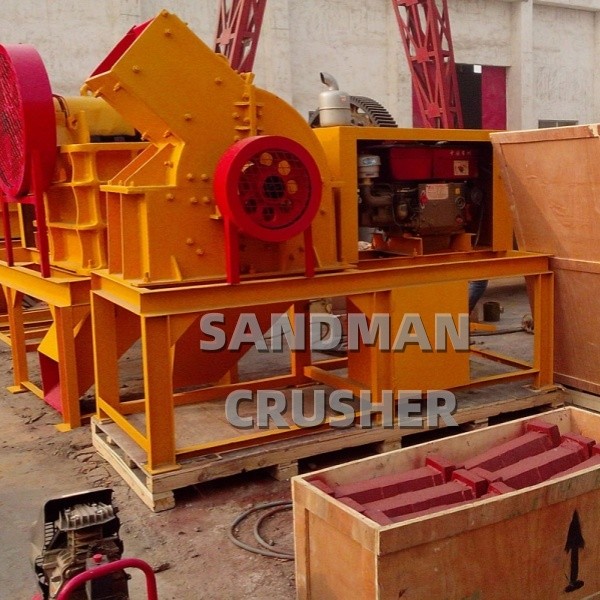

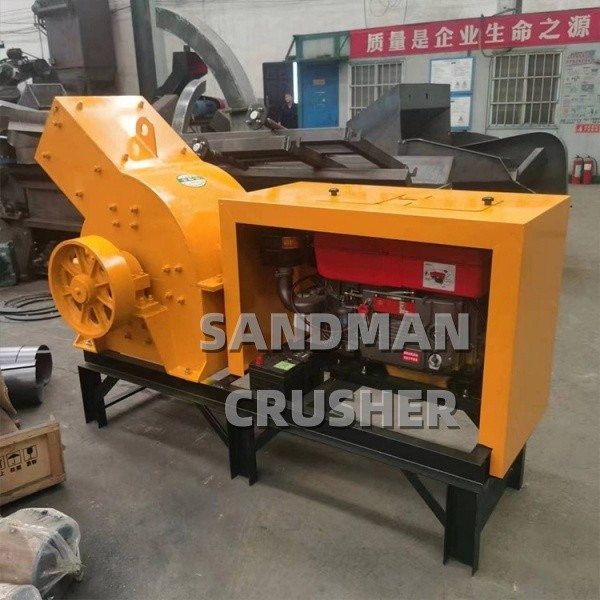
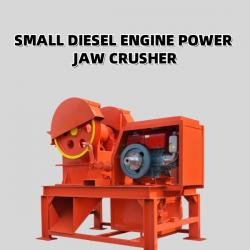
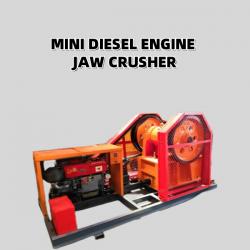
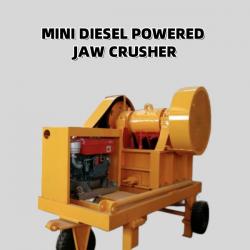
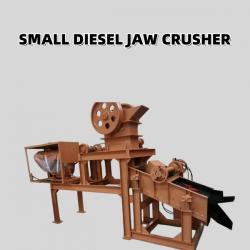
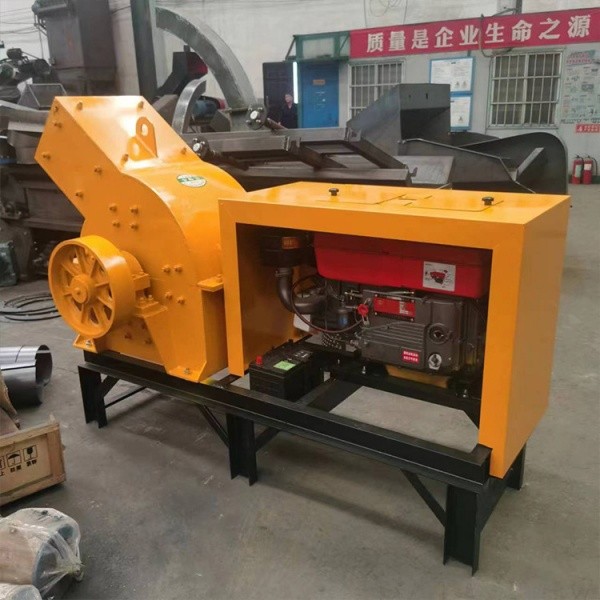
3-10tph small cement crusher is a machine used for crushing cement and mineral ore.
It is widely used in cement production lines and building material plants. It meets crushing needs at every stage of cement manufacturing.
Introduction to cement crusher
The cement crusher, often called a “hammer crusher,” is a widely used stone crusher. Cement production and mineral ore processing use it often.
It primarily relies on the impact energy generated by high-speed rotating hammers to crush medium-hardness, brittle materials. Thanks to its excellent crushing performance and practical design, it is now a key crushing component in stone crushing area. It is widely used in cement production lines and building material plants. It meets crushing needs at every stage of cement manufacturing.
Core Parameters of cement crusher
The feed size, output capacity, and discharge size of cement crusher vary by model and specification.
This helps meet different cement production scales and material processing needs.
1. Feed Size: For this small-scale cement crusher model, the maximum feed size is 50 mm. Feeding larger materials will reduce equipment performance.
Generally, small cement hammer crushers accept feed sizes of 50–100 mm.
Medium units handle feed sizes from 100–500 mm.
Large, single-stage cement hammer crushers accept feed sizes up to 500–1000 mm. These large units can process bulky materials, such as cement clinker and limestone, without preliminary coarse crushing. This simplifies the early stages of the crushing process.
2. Output Capacity: This diesel-powered cement crusher model can produce 3 to 10 tons per hour.
The output capacity range of cement crusher is wide. Small hammer crushers deliver 5–20 t/h per hour. This makes them suitable for small cement processing sites. They also suit the crushing of scattered, sporadic materials.
Medium-sized crushing machines run at 20–100 tons per hour, perfect for regular crushing needs of small and medium cement plants
Large hammer cement crushers hit 100–1000 tons per hour, ideal for big cement plants’ high-volume continuous production.
These units demonstrate robust capacity stability, ensuring consistently high efficiency in crushing operations.
3. Discharge Particle Size: Cement crusher uses grate bars to control finished material size, so the output particle size can be adjusted flexibly.
Standard discharge sizes cover common specs like ≤5mm, ≤20mm, ≤30mm and ≤50mm. It produces evenly sized materials with little over-crushing.
This cement crusher fully meets the particle size needs for crushing cement raw meal and clinker. It saves extra screening work and greatly improves overall production efficiency.
Application Fields of Cement Crusher
The cement crusher is highly practical and boasts a wide range of application scenarios. It’s mainly designed for the full production process of the cement industry, and also works well in many other material processing fields, such as:
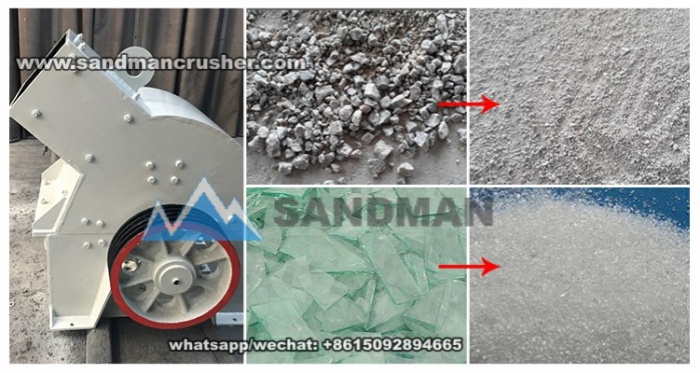
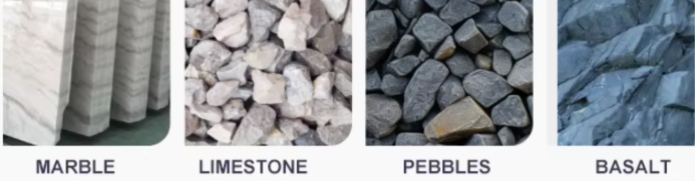
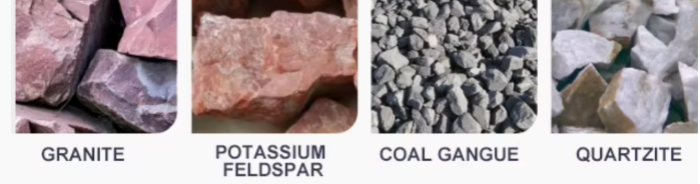
This is its main application. Cement crusher widely used in cement manufacturing to crush limestone, cement clinker, slag, gypsum and other materials in the production process.
Cement crusher can crush all kinds of fragile construction raw materials, including stone, bricks, tiles and ceramics. The finished crushed materials fully meet the production needs of the building materials industry.
It is fit for secondary and fine crushing of medium-hard ores like limestone, dolomite and shale in non-metal mining. Besides, cement crusher can crush slag, coke and other materials for metallurgy, to satisfy processing demands of mining and metallurgical industries.
It crushes and reuses solid waste such as construction waste and industrial waste residue. These waste materials are turned into usable aggregates, which realizes the recycling and reuse of solid resources.
Technical Parameters of cement crusher
| Model: | D4030 |
| Hammer feed opening: | 300*400mm |
| Feed input size: | <100mm, or smaller in all directions |
| Capacity: | 3-10 tons per hour(average 5tph) |
| Product output size: | 0-35mm(1 type output size) |
| Power system: | 14hp diesel engine |
| Fuel consumption: | about 2.5 liters per hour |
| Crushing material: | soft rocks, such as limestone, pavers, bricks, concrete, glass, dry bones, etc. |
| conveyor belts: | 0 |
| Configuration: | hammer crusher, diesel engine, support frame |
Note: Technical data are subject to change without prior notice.
Features of cement crusher
1. Simple Structure & Easy Maintenance:
This cement crusher is built with a simple structure. Its internal parts are neatly arranged, with no complex drive or connection parts.
It’s easy to check and maintain daily. If any fault occurs, problems can be found and fixed quickly. This cuts down downtime a lot and keeps production running steadily.
2. Few Wear Parts, Low Operating Costs:
Compared to other types of crushers, the hammer cement crusher features fewer wear parts.
Furthermore, its core wear components are crafted from superior materials and possess exceptional durability, effectively reducing the frequency of replacements. This minimizes the labor and material costs associated with subsequent equipment maintenance, thereby enhancing the overall cost-effectiveness of the machine.
3. High Adaptability, No Blockage:
It removes the traditional bottom screen and uses adjustable grate bars instead. It can handle materials with any moisture content and won’t get clogged easily.
It crushes smoothly and efficiently even when crushing wet materials, with no risk of clogging at all. At the same time, crushed materials flow out easily without building up or getting stuck inside, so it works well for crushing under almost any moisture condition.
4. High Efficiency and Eco-Friendly Operation:
The cement crusher equipment features a fully sealed structural design that blocks dust while the crushing. This resolves dust pollution issues within the crushing workshop at the source, significantly improving the working environment.
5.Durable Parts & Stable Performance:The bearing housings are made from solid cast steel, strong enough to handle heavy loads and keep the machine running steadily.
The scientifically engineered design is ideally suited for long-term, high-intensity crushing operations. The hammers are made with a new high-chromium alloy, making them highly wear-resistant and tough enough to withstand heavy impacts.
When crushing continuously under heavy impact, these hammers don’t wear out or break easily.They last much longer than ordinary parts and keep the machine running steadily for a long time.
Working Principle of the cement crusher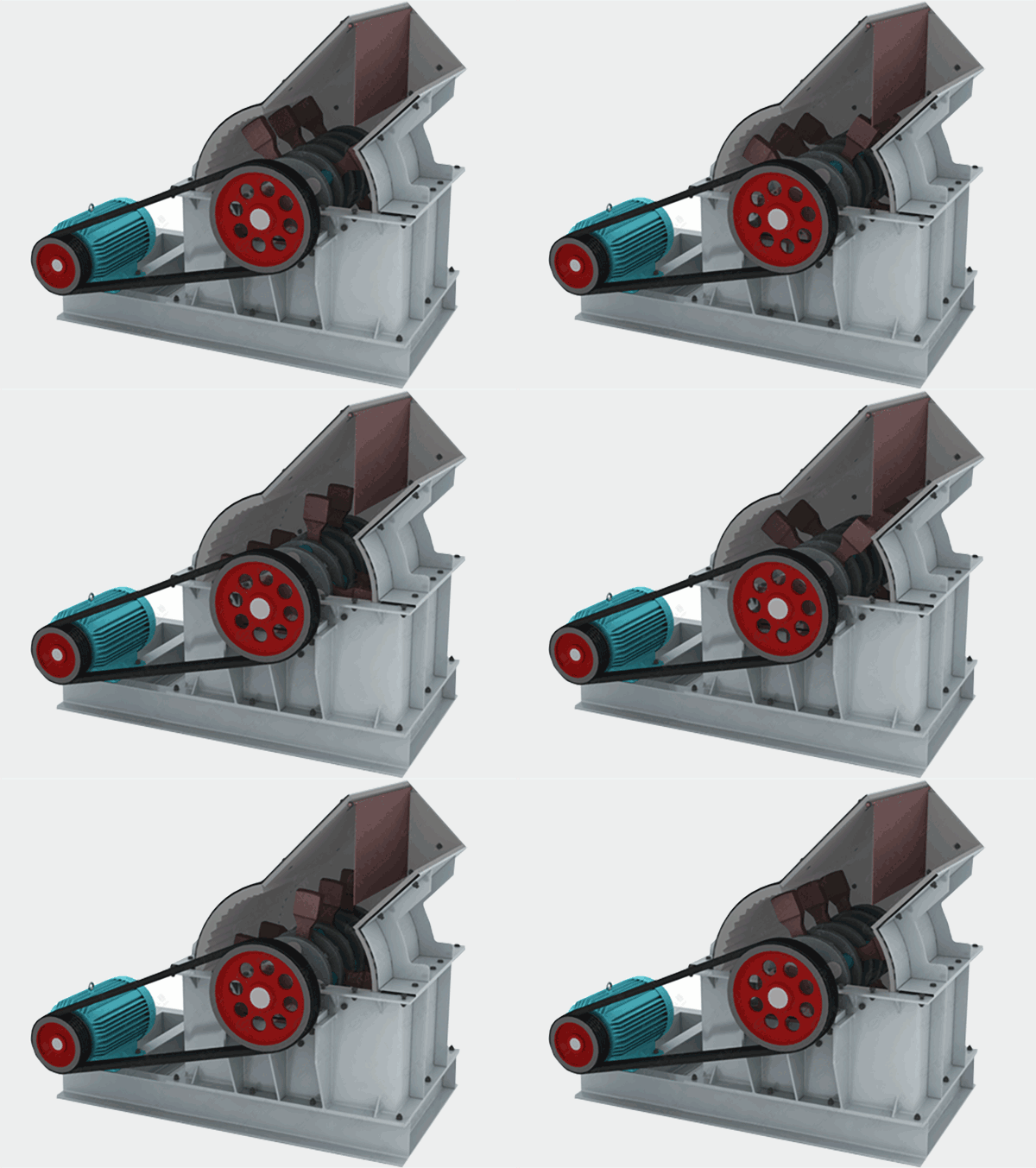
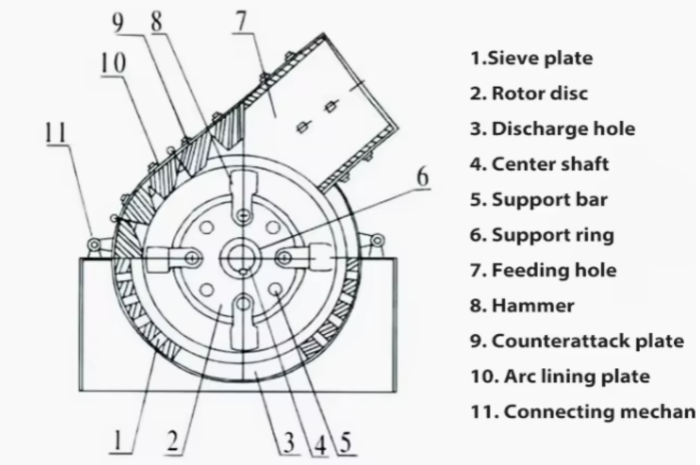
The cement hammer crusher works by hitting materials to break them, so it runs efficiently and continuously.
When you turn on the machine, the motor spins the rotor at high speed. The hammer heads on the rotor move in circles quickly.
After you feed materials evenly into the crushing chamber, the fast-moving hammers hit them hard and break them right away.
The small pieces then fall down toward the screen, pushed by the hammer force and their own weight. On the way down, they hit against each other to get even smaller. Materials that are small enough pass through the screen and come out of the machine.
Larger materials that are still too big stay inside the chamber. They keep getting hit and ground by the hammers until they are small enough to be discharged. The whole process runs nonstop, crushing and sizing materials in one go.
Wear Parts and Replacement Intervals for Small Cement Crusher
The small cement hammer crusher features a relatively low number of wear parts. The core wear parts and their standard replacement intervals are as follows:
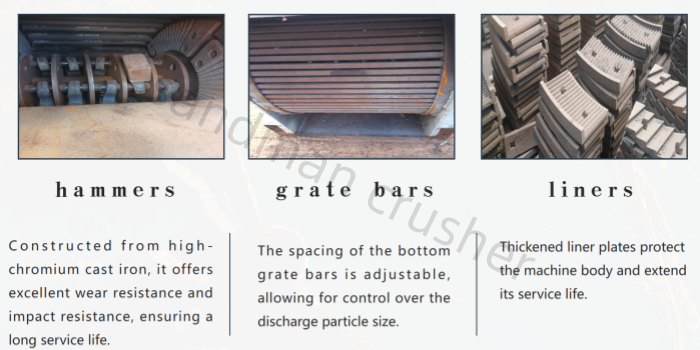
1. High-Chrome Alloy Hammers:
As the most critical crushing components, these parts are constantly subjected to material impact and abrasion. During normal continuous use, check the wear level every 3 to 6 months.If a hammer is worn down by more than one-third, or if it chips or breaks, replace it right away.This avoids lower crushing efficiency and uneven material size.
2. Grate Bars:
Under normal working conditions, replace these parts every 6 to 12 months.If you crush very hard materials, replace them more often, every 4 to 8 months, to keep the output size consistent and up to standard.
3.Liner Plates:
These plates are fixed inside the crushing chamber to protect the machine .please check and replace them every 8 to 12 months.If they wear too much or come loose, they can damage the main machine.
Operating Procedures for Small Cement Crusher
Pre-Startup Preparations
1. Conduct a comprehensive inspection to ensure that all connecting bolts on the equipment are securely tightened. Pay close attention to key parts like hammer heads, rotors and bearing housings to stop issues caused by loose parts. Check the tension of the drive belts to ensure the transmission system operates smoothly.
2.Check the lubrication system.Make sure bearings and other moving parts have enough clean oil,and that no pipes are blocked or leaking. This keeps all parts well lubricated.
3.Clean out any leftover materials to avoid jams or overload when starting the cement crusher. Check that the gaps between the grate bars are correct for your required output size, and that all seals are in good condition.
4. Perform a no-load test run of the equipment. Check the rotor rotation direction and listen for unusual noises. Only start feeding materials when everything runs normally.
Operation Procedures
1. Material must be fed into the machine evenly and continuously. Do not dump large amounts of material into the machine at once, and do not feed materials larger than the machine can handle. This avoids overload and jams, which reduce crushing efficiency and shorten the machine’s service life.
2. Closely monitor the equipment's operating status throughout the process. Continuously listen for operating noises and observe the motor's current readings in real-time. If you notice strong vibration, strange noises or sudden high current, stop the machine and cut off the power right away to fix the problem. Do not run the machine when something is wrong.
3. Never open the inspection doors or touch any moving parts while the machine is running. Do not perform maintenance or cleaning during operation to keep operators safe.
4. Strictly control the nature of the input material. Do not put unsuitable items like metal pieces or very hard stones into the machine. This will protect key parts such as the hammer heads and grate bars from damage.
Post-Shutdown Procedures
1. First, stop feeding material into the machine. Let the machine run empty until all materials inside are fully discharged, then turn off the main power to shut it down.
2. Upon shutdown, promptly clear any residual material and dust from the crushing chamber, feed inlet, and discharge outlet. Check wear parts like hammer heads, grate bars and liner plates for wear,and keep detailed records of their condition.
3.Perform regular maintenance on moving parts and lubrication points. Add oil when needed, tighten loose bolts, and clean up debris around the machine. Keep the equipment and its surroundings clean and tidy.
4. Maintain comprehensive operational records—including operating duration, production output, and details of any malfunctions—to establish a robust equipment maintenance and operations log. This documentation serves as a vital reference for future maintenance planning and repair activities.
Equipment Selection Recommendations
To help you choose the right stone crusher for your production, please provide these key details:
your required output, maximum material size, material stones, and target finished particle size.
We will recommend a cost-effective and suitable crusher model for you.
Contact: Hebe Wang
Phone: +86 150 9289 4665
Tel: +86 150 9289 4665
Email: info@sandmancrusher.com
Add: No.23 Yihe Road,Linyi City, Shandong Province, China
We chat