info@sandmancrusher.com
+86 150 9289 4665

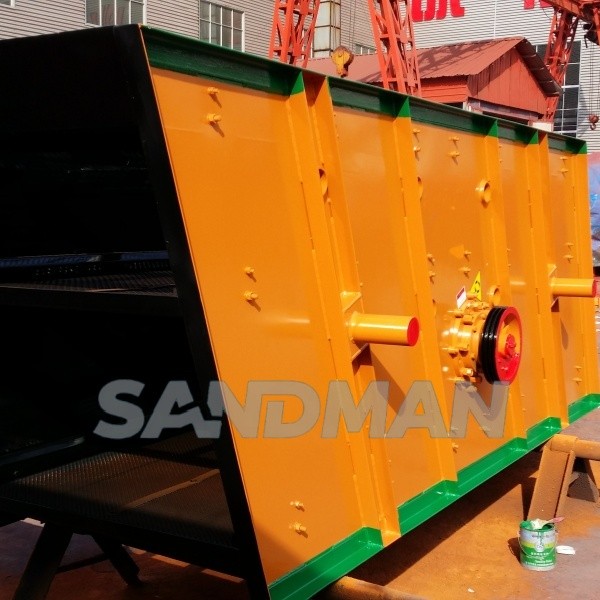
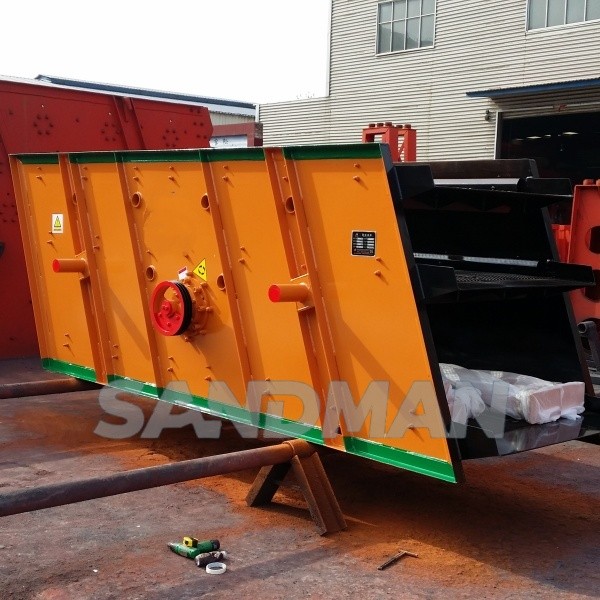
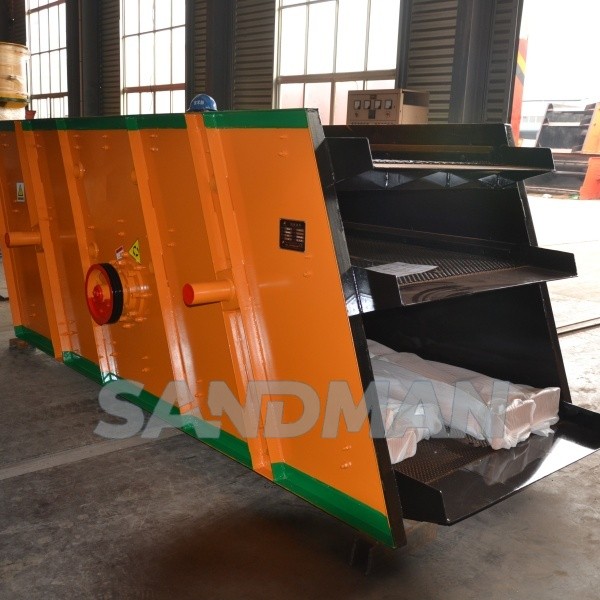
【Production Capacity】10-200 tons per hour
【Feed particle size】0-8''
【Number of screen layers】 2--4
【Output size】0--4''
【Vibration frequency】960
【Power system】Motor or Diesel engine
【Applicable materials】rock quarries, sand and gravel, mining, construction and demolition recycling, construction aggregates, coal,road and railway construction, metallurgy, water conservancy, and chemical industry.
【Price】$1000--$10000USD
Overview
A vibrating screen for a stone crusher is a machine that separates aggregate by particle size through the use of an exciting force applied to the machine. The vibrations lift the material, stratifying it and causing smaller materials to move from the top of the material depth to the bottom of the material, exposing them to the screening surface.
Screening is one of the most important parts of the sand and gravel aggregate production process. It occurs before and/or after the crushing stage and produces the desired specifications for the final product.
The purpose of screening is to separate the stream of aggregate particles into uniform sizes. This is achieved by using a vibrating screen.
Introduction
A vibrating screen for a stone crusher is designed to handle large volumes of material and can operate at high frequencies, typically between 600 and 7200 RPM. It can be used at multiple stages of the production process, from initial screening to final product grading.
Vibrating screens come in a variety of sizes. They range in width from 4 feet to 120 feet and in length from 6 feet to 32 feet. The width of the screen determines the load-bearing capacity of the screen deck, while the length of the screen determines the overall efficiency of the screen.
Overall, aggregate vibrating screens and gravel screens for sale are important tools for the construction and mining industries because they can screen materials efficiently and effectively, helping to ensure that only the right materials are used in construction projects or further processing.
How many decks are needed for a sand and gravel vibrating screen?
Vibrating screens can be configured with one, two, three, or four layers. Three-layer screening is common in the aggregate industry, but the number of screen layers depends on the amount of product that needs to be produced on site.
Aggregate screens are available in a variety of sizes to accommodate different types of materials and production requirements. The size of the screen is generally determined by the mesh size, which refers to the number of holes per inch of linear length of the screen. The larger the mesh size, the smaller the holes and the greater the screening capacity.
Common mesh sizes for aggregate screens sold by aggregate screen manufacturers include:
3/8 inch - commonly used for screening sand and gravel
1/2 inch - commonly used for screening crushed stone
5/8 inch - commonly used for screening larger-sized gravel
3/4 inch - commonly used for screening asphalt or concrete mixes
1 inch - commonly used for screening larger-sized materials, such as large pieces of rock
It is worth noting that in addition to these common sizes, there are other mesh sizes available, depending on the specific application and the material being screened. In addition, some screens may use multiple layers of mesh with different mesh sizes to achieve more precise material screening and separation.
Working principle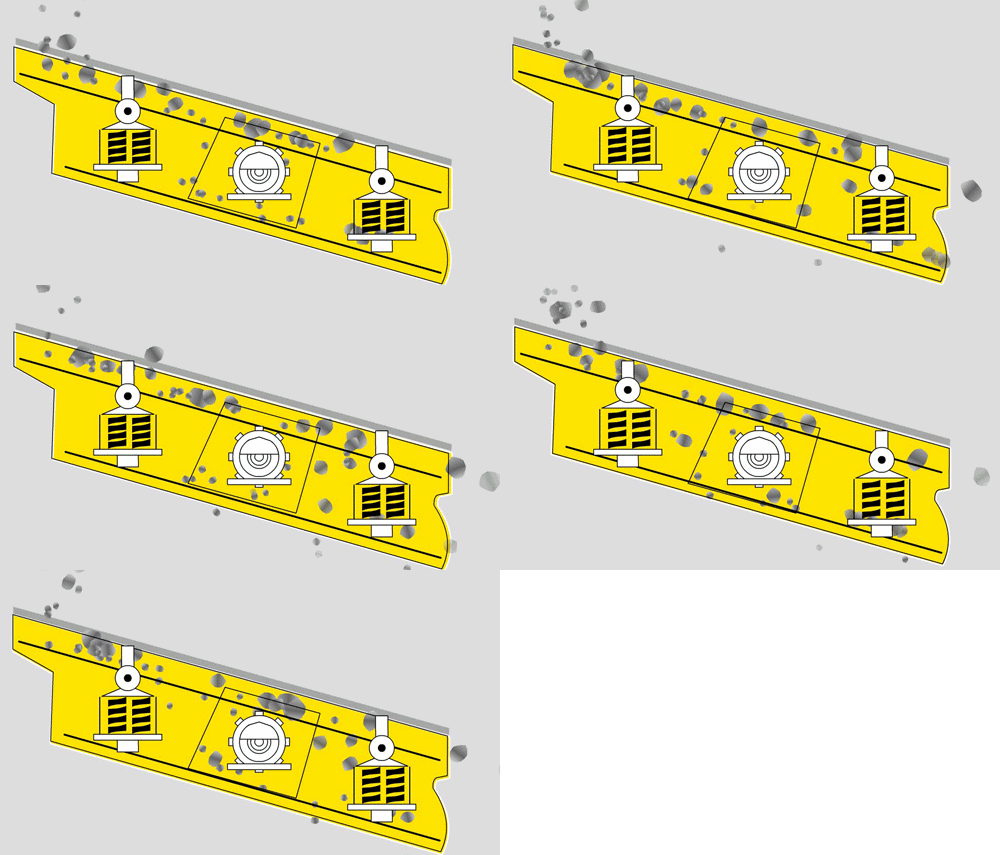
The vibrator is mounted on the side plate of the screen and consists of an electric motor and an unbalanced weight mounted on the end of the drive shaft. The motor rotates the drive shaft, and the unbalanced weight generates centrifugal force, causing the screen to vibrate. When the material to be screened is fed into the screen, the vibrating motion of the screen separates the material into different sizes. Smaller particles fall through the screen and are discharged, while larger particles continue to vibrate until they reach the edge of the screen and are discharged.
The vibration-damping device is used to reduce the vibration transmitted to the ground and the supporting structure of the screen machine, thereby reducing noise and preventing damage to the screen machine. In summary, the working principle of the vibrating screen is to use the vibration generated by the motor-driven eccentric or unbalanced mass to separate the material into different particle sizes according to the particle size. The vibration-damping device reduces the vibration transmitted to the ground and the supporting structure.
How to choose the right aggregate screen?
Choosing the right aggregate screen depends on several factors, including the type of material being screened, production requirements, and budget. Here are some factors to consider when choosing an aggregate screen:
1. Material Type: Different materials have different screening requirements. For example, gravel may require a screen with a smaller mesh size, while crushed stone may require a screen with a larger mesh size. When choosing a screen, consider the type of material being screened and its particle size distribution.
2. Production Requirements: Production requirements will also play a role in choosing the right screen. Consider factors such as the desired throughput rate, screening efficiency, and the desired size distribution of the final product.
3. Screen Type and Design: There are different types of screens and designs
Technical Parameters
| Model | Max Feeding (mm) | Capacity (t/h) | Power (kw) | Sieve size (mm) | Dimension (mm) |
| 4YK1236 | 50 | 20-50 | 7.5 | 1200x3600 | 3575x2085x3215 |
| 4YK1345 | 80 | 40-70 | 15 | 1300x4000 | 5200x1820x1900 |
| 4YK1555 | 120 | 60-90 | 22 | 1500x5000 | 6340x2140x2190 |
| 4YK1865 | 150 | 80-120 | 22 | 1800x6000 | 7385x2452x2430 |
| 4YK2165 | 180 | 100-180 | 30 | 2100x6000 | 7385x2752x2430 |
| 4YK2465 | 200 | 120-200 | 37 | 2400x6000 | 7385x3052x2430 |
| 4YK2570 | 220 | 140-220 | 30x2 | 2500x7000 | 7890x3380x2450 |
Note: Technical data are subject to change without prior notice.
Contact: Hebe Wang
Phone: +86 150 9289 4665
Tel: +86 150 9289 4665
Email: info@sandmancrusher.com
Add: No.23 Yihe Road,Linyi City, Shandong Province, China
We chat